Three lessons from Geneva Digital Week on building a responsible AI future

July 21, 2026
Artificial intelligence is advancing at an extraordinary pace. The decisions we make today will shape not only the future of technology, but the future of an entire generation. We need to ensure AI is safe, inclusive and designed with children’s rights at its heart.
These questions were at the centre of Geneva Digital Week where we joined governments. UN agencies, technology companies, researchers, academia, civil society and philanthropy to explore one of the defining challenges of our time: how do we harness AI’s enormous potential while ensuring it is developed responsibly, ethically and inclusively?
Bally Sappal, Head of Development, shares her reflections on Geneva Digital Week, July 2026.
Bringing together three landmark global events: the first United Nations Global Dialogue on AI Governance, the World Summit on the Information Society (WSIS) Forum 2026 and the AI for Good Global Summit 2026, Geneva Digital Week witnessed several important milestones, including the launch of the AI for Good Global Commission and the ITU Focus Group on AI Agents, as well as the Preliminary Report of the Independent International Scientific Panel on Artificial Intelligence and continued engagement around the WSIS+20 Review – highlighting the importance of international cooperation in shaping the future of AI.
One of the highlights was Microsoft Vice Chair and President Brad Smith’s keynote speech which focused on harnessing AI to improve lives, preparing people for an AI-enabled future and strengthening the governance and partnerships needed to build trust. Those themes resonated throughout the week and reflected many of the conversations I had. One point that particularly stayed with me was the constant reminder that over two billion people globally remain excluded from the internet. As AI accelerates, ensuring inclusion and closing the digital divide has never been more important.
The Council of Europe’s discussion during the WSIS Forum on its Framework Convention on AI also stood out. Hearing how the framework convention is helping shape a human-centred model for AI governance reinforced the importance of developing common standards as AI continues to evolve. It was also exciting to start and continue discussions with partners around WeProtect Global Alliance’s planned joint Council of Europe event in June 2027, which will bring together partners to explore emerging technologies, child online safety and the prevention of technology-facilitated child sexual exploitation and abuse.
Three themes in particular resonated with me:
- Putting children at the centre of AI. Sessions led by UNICEF, LEGO Education, 5Rights Foundation, the UN Committee on the Rights of the Child, OHCHR and ITU highlighted the need to move beyond protecting children from harm and ensure they are active participants in shaping the technologies that affect their lives. The strong emphasis on safety by design, children’s rights and prevention was encouraging and closely aligned with WeProtect Global Alliance’s mission to help build a digital world free from child sexual exploitation and abuse.
- Preparing people for an AI-enabled future. Microsoft’s Human Agency, AI and the Future of Mission Work workshop with speakers including LinkedIn explored how organisations can embrace AI while keeping people at the centre. My biggest takeaway was that AI has enormous potential to drive innovation, productivity and inclusive economic growth, but only if organisations invest in people, digital skills and responsible adoption alongside the technology itself. LinkedIn estimates that widespread adoption of AI could unlock trillions in productive capacity across major economies.
- Building trust through collaboration. Whether discussing AI governance, digital scams, humanitarian action or responsible innovation, one message came through consistently: no single organisation can solve these challenges alone. This is especially true for technology-facilitated child sexual exploitation and abuse, where coordinated, prevention-led action across governments, industry, civil society, academia and international organisations is essential.
Beyond the sessions, one of the greatest benefits of the week was reconnecting with existing partners and building new relationships. I had the opportunity to connect with colleagues from UNICEF, Microsoft, LinkedIn, IBM, GSMA, Google, TikTok, LEGO Education, the Siegel Family Endowment, APNIC Foundation, Save the Children, Plan International and 5Rights Foundation. These conversations emphasised how much more we can achieve by working together across sectors.
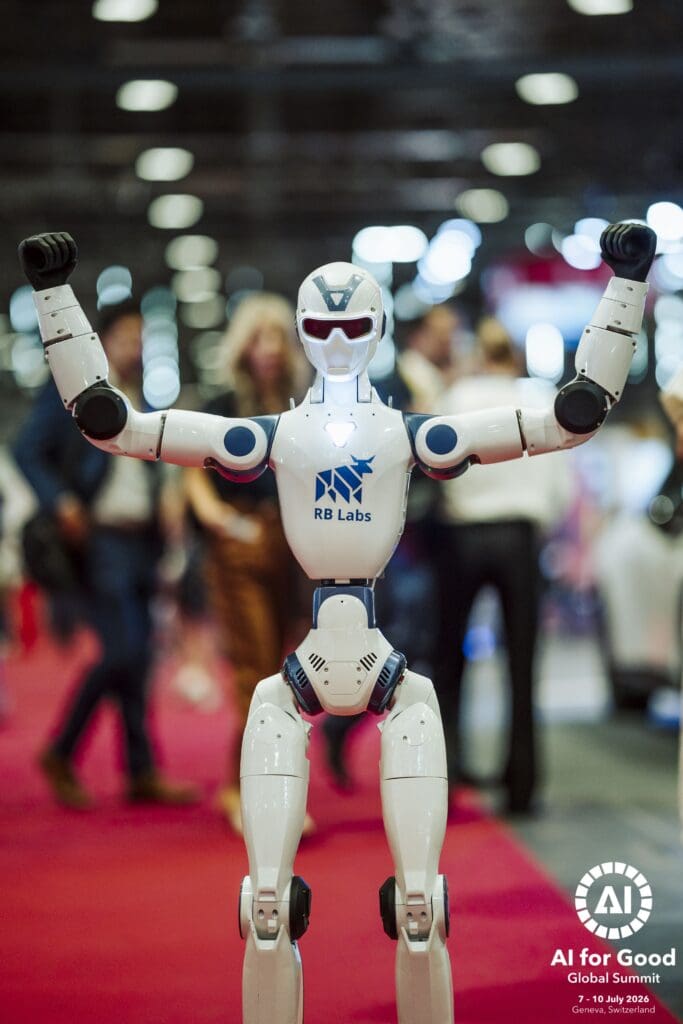
There were also some memorable lighter moments. It was great to hear contributions from will.i.am talking about his start-up FYI.AI and John Legend discussing the role and limitations of AI in music production, although I have to admit I was slightly disappointed there wasn’t any singing! There were an incredible range of robots on display, even if some of the lifelike humanoid robots were a little scary.
For WeProtect Global Alliance, the week reinforced something we have long believed and actively work on: protecting children online in the age of AI requires governments, technology companies, researchers, international organisations and civil society to work together. As an independent global convener and enabler, the Alliance helps align these actors around shared evidence, practical frameworks and collective action to prevent and respond to technology-facilitated child sexual exploitation and abuse.
As AI continues to evolve, the choices made by governments, industry and civil society today will have lasting consequences for children. Geneva Digital Week reinforced that protecting children online cannot be an afterthought. Children’s rights, safety and participation must be embedded into AI from the start, with a prevention-led approach that reduces harm before it occurs and enables every child to benefit from the digital world safely, confidently and free from exploitation and abuse.
Sign up to our newsletter to learn more about our work and visit this page to find out how to become a member.